
Pragmatics of Democracy: A Political Theory of African American Literature Before Emancipation
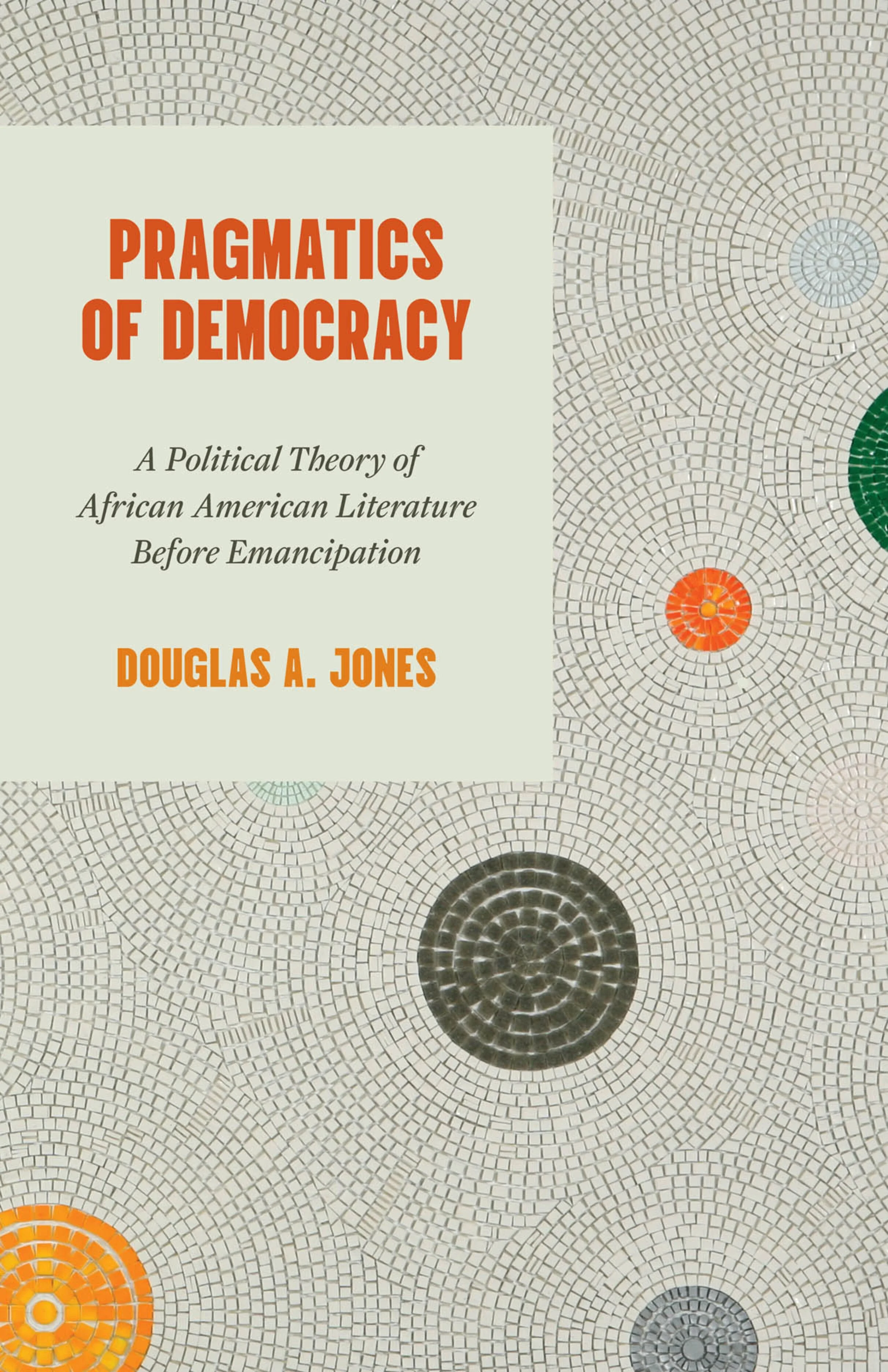
Douglas A. Jones
University of Chicago Press
Douglas A. Jones’s Pragmatics of Democracy reads African American literature, from its beginnings through the mid-nineteenth century, to theorize how we have come to regard democracy as the most excellent form of political life.
Jones notes that the aims of democracy, especially consent of the governed and equality under the law, can seem like tenets of governance that humans desire instinctively. But human nature does not correlate absolutely to politics. Jones argues that political selfhood is formed by “bodily events.” He proposes a typology of such experiences that dispose persons toward democratic subjectivity: ecstasy, impersonality, violence, respectability, and care.
African American literature before Emancipation reveals the democratic features of these categories that conventional political philosophy ignores or obscures. Pragmatics of Democracy discusses the works of well-known figures such as Phillis Wheatley, Harriet E. Wilson, and Frederick Douglass as well as those of more neglected writers such as Richard Allen, Peter Paul Simmons, James McCune Smith, and Frank J. Webb. With warmth and immersive storytelling, Jones encourages us to delve deeper into our collective history, explores how curiosity about our world is essential—and reminds us that with stakes so high, the effort is worth it.